
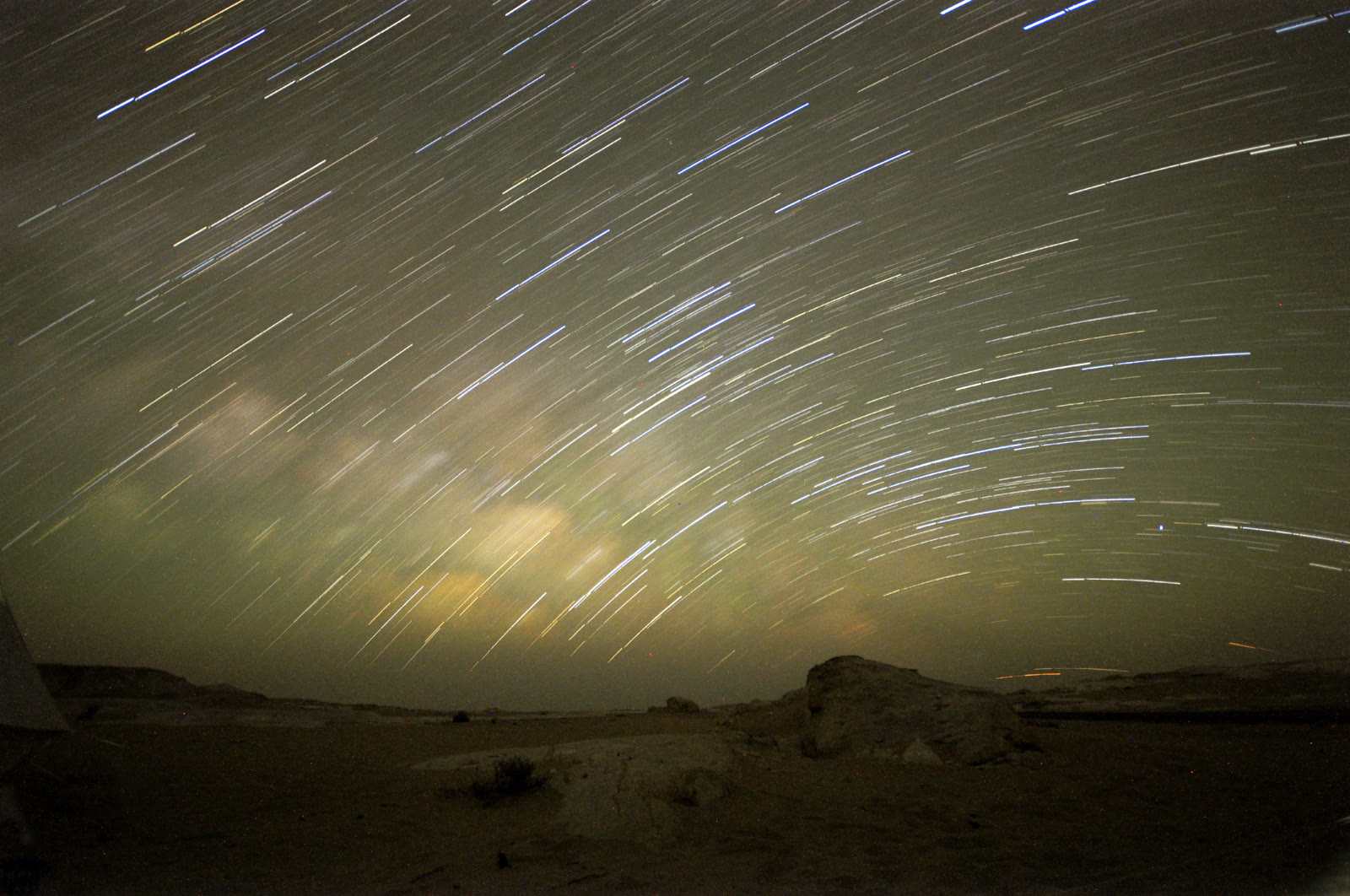
After dark, the chalk begins to glow
How scale, pale stone and low light change a familiar desert silhouette.
Egypt after the glare
A field guide to dusk on the Nile, stars over the desert, dawn on Sinai and the patient minutes when a horizon changes colour.
Four transitions
These are not nightlife listings or tour offers. Each note uses one landscape to explain a different change in light, scale and attention.
How scale, pale stone and low light change a familiar desert silhouette.

Reflection keeps the sky present while the banks turn into silhouettes.

Night travel, cold air and layered ridges require patience—and current local preparation.

Read an oasis sunset through foreground, distance and the cooling air between them.
Viewing practice
Learn the route, edges and return point while useful light remains. A night landscape should not begin with disorientation.
Give your eyes time and keep necessary light low, warm and directed toward the ground. Bright screens reset the process.
Choose a ridge, tree line or rock edge and watch its contrast change. The landscape becomes measurable when the viewpoint stays still.
Desert, mountain and shoreline conditions require current local information. This publication does not replace guides, permits or on-site authority.

An important limit
Afterlight Egypt explains visual phenomena and landscape character. It does not operate trips, verify remote access, predict cloud or guarantee a safe route.
Use the responsible authority and experienced local guidance for current conditions. Preserve darkness, remain on legitimate routes and make the return plan before the photograph.
Read our editorial limits