Western Desert · oasis and distance
Siwa's western horizon
A Siwa sunset is not simply the sun dropping over sand. Palms, water, cultivated plots, settlement and desert edge create a layered foreground that gives the horizon its meaning.
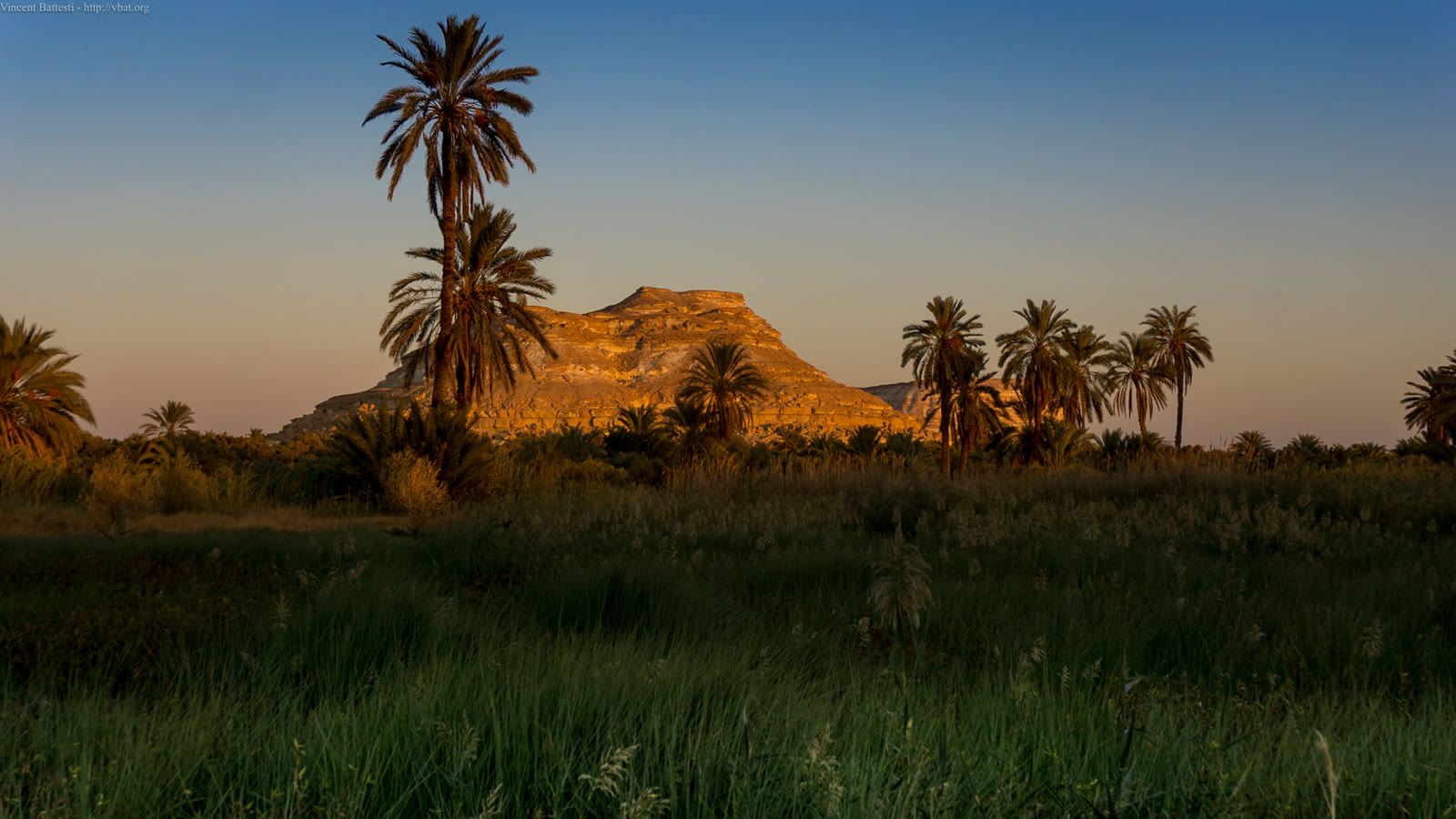
The oasis is the foreground
Siwa lies within Egypt's Western Desert, but an oasis landscape is neither empty nor visually simple. Palm groves create vertical rhythm. Cultivated ground introduces low horizontal bands. Water and damp earth can reflect or deepen colour. Built forms and tracks reveal that the view is also a lived and worked environment.
Begin by looking away from the sun. Identify the nearest planted layer, a middle layer of palms or settlement and the distant landform or open edge. Then turn west and keep those layers in mind. The sunset becomes less generic because you understand what its light is falling across.
Palms measure the sky
A broad desert horizon can be difficult to scale. Palm silhouettes divide it into intervals. Their trunks mark verticals; crowns register wind; groups of different height reveal distance. When details disappear, these simple forms remain readable.
Select three palms at different apparent distances. Watch how quickly each becomes a silhouette. The nearest may lose colour while still showing trunk texture. A farther row may combine into one dark mass. Beyond it, an isolated crown can remain distinct against the brightest band. This progression turns fading light into spatial information.
In an oasis, the horizon is never alone. Cultivation tells you how far away it is.
Warmth leaves unevenly
Sunset colour is not distributed equally. Dust and haze may strengthen a warm band near the horizon while the upper sky cools. Reflective water can hold brightness after soil and vegetation darken. Pale walls may retain colour differently from palm trunks. Every material leaves daylight at its own rate.
Instead of naming the sky “orange,” compare two surfaces. Is the water warmer than the air above it? Does a pale built edge remain visible after the palms merge? Is the far desert cooler in colour than the dust close to the horizon? Specific comparisons resist the flattened language of a postcard.
Temperature is part of the scene
After sunset, air and ground conditions can change quickly, and the shift affects how long a person wants to remain still. A breeze becomes more noticeable. The smell of vegetation or earth may strengthen. Insects, birds and human activity may change rhythm. These are not secondary details; they are how the visual transition enters the body.
Prepare for the return before waiting for darkness. A path that was clear at sunset may be difficult later, and cultivated or private land should never be treated as an unrestricted viewpoint. Use current local guidance, remain on legitimate routes and seek permission where appropriate.
Watch the western band after sunset
When the sun has gone, a narrow bright band may remain above the western edge while the upper sky cools. Palms crossing that band look crisp; the same palms against a darker part of the sky may nearly disappear. The distinction moves as twilight progresses.
Hold one crown at the boundary between warm and cool colour. Notice whether the boundary rises, fades or is interrupted by haze. This is a more durable observation than waiting for one intense colour. It shows how the atmosphere redistributes the last direct influence of the sun across the oasis skyline.
A layered horizon study
- Name the nearest cultivated or planted layer before looking west.
- Choose three palm silhouettes at different apparent distances.
- Compare how water, earth, foliage and pale walls retain colour.
- End while the return route remains comfortably legible.
Resist the empty-desert story
A photograph can crop out the networks of care that sustain an oasis. Water, agriculture, local knowledge and daily work are not scenery added to a desert sunset. They are the conditions that make the foreground possible. Observe without entering fields, climbing structures or turning residents into unasked subjects.
Siwa's western light is memorable because it holds difference: dense palms against open sky, cultivated land beside desert distance, warm colour followed by rapid coolness. A responsible viewpoint allows those relationships to remain visible without claiming the land as a stage. Stay long enough to see one layer disappear, then leave with the route—and the place—intact.

.jpg)