South Sinai · altitude and first light
Sinai before sunrise
A summit dawn is often pictured as a single burst of colour. In reality, it begins much earlier—with darkness, cold, footsteps and the slow separation of one mountain ridge from another.
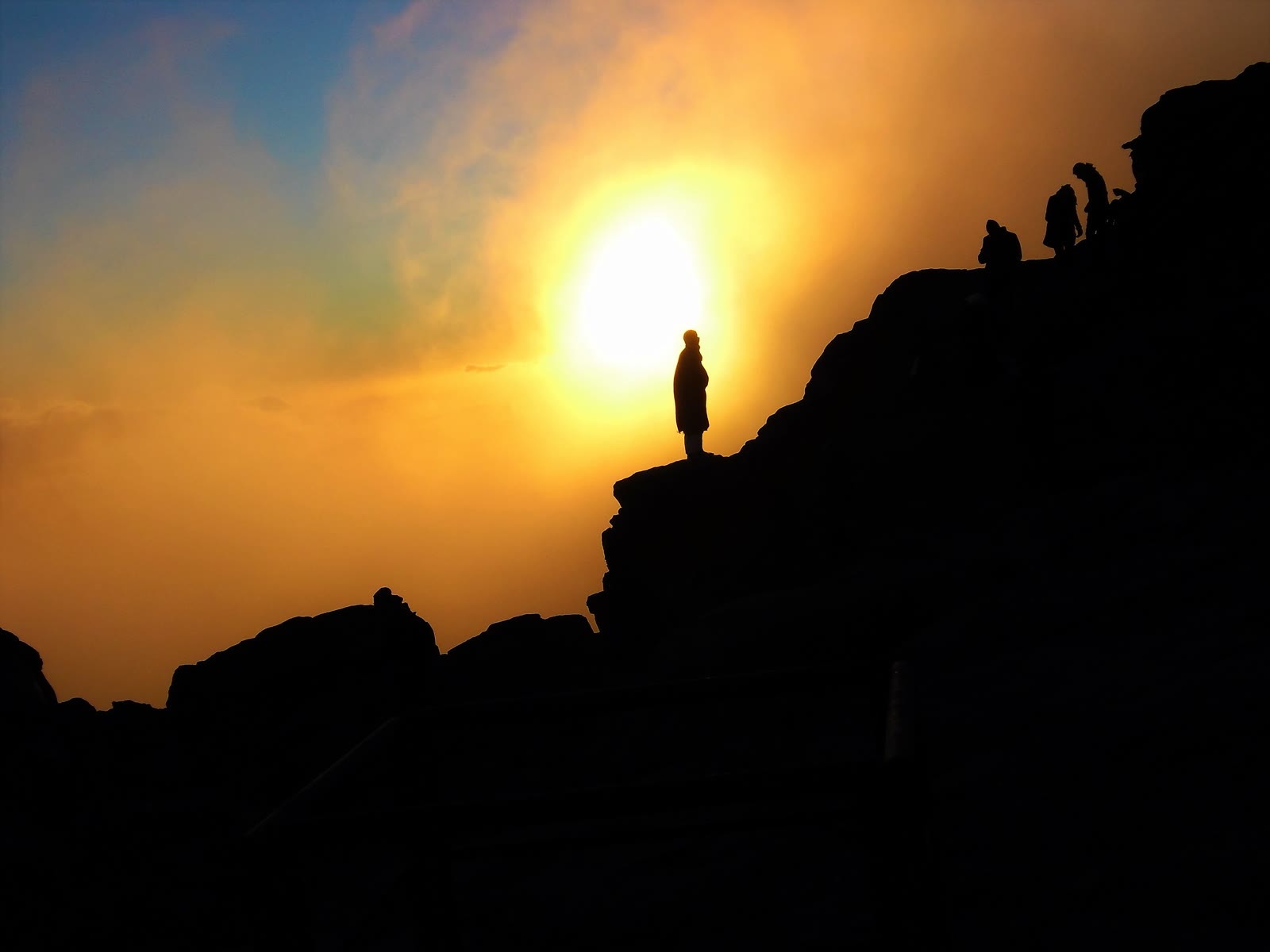
The photograph hides the approach
Mount Sinai, also known as Jabal Musa, is a place of major religious significance and a familiar sunrise destination. The final image usually removes the difficult part: moving on mountain terrain during the night. A bright horizon may last minutes, but the approach requires hours of decisions about pace, clothing, guidance, route condition and energy for the descent.
Do not use a visual essay as a route instruction. Current access arrangements, local guiding requirements, security conditions and weather must be confirmed through responsible local channels. Experience, health and mobility matter. If the route is not appropriate, sunrise remains visible from many safer contexts; no photograph makes a summit compulsory.
Cold changes attention
Elevation and pre-dawn conditions can feel substantially colder than the daytime environment below. Wind increases heat loss and makes a stationary wait demanding. Cold narrows attention: instead of studying the horizon, a person may focus only on discomfort. Preparation is therefore part of perception.
Use season-appropriate layers and follow current local advice rather than relying on a generic desert stereotype. A warm daytime forecast elsewhere in Sinai does not describe an exposed summit before sunrise. Protect water and necessary equipment, and preserve enough energy for the route down after the emotional high point has passed.
Ridges emerge in planes
Before colour becomes obvious, contrast begins to change. The nearest ridge is usually darkest. A second ridge separates from it as a slightly lighter shape. More distant ranges may appear softer because atmospheric particles scatter light and reduce contrast. This layering is one of the most instructive dawn effects in a mountain landscape.
Choose one notch or summit on the skyline and hold it in view. Watch the space around it brighten. The land may remain nearly black while the sky becomes readable, then texture slowly returns to the rock. This is quieter than the first direct sun and often more revealing.
Dawn does not uncover a mountain at once. It gives depth back one plane at a time.
Colour travels before the sun
Warm colour can appear in the sky before the sun itself is visible. Cloud, haze and the shape of the horizon influence where that colour concentrates. A clear band near the edge may glow while the upper sky remains cool. Behind you, an opposite band or subtle shadow can be just as interesting as the expected eastward view.
Turn carefully only where footing and space allow. A crowded viewing area is not the place for sudden movement or a wide tripod footprint. The landscape is shared with local guides, religious visitors and other travellers. Keep paths and sightlines usable.
A sacred landscape is not a backdrop
The mountain's importance cannot be reduced to sunrise aesthetics. It is connected to living religious traditions and to the communities whose knowledge and work shape access. Observe the conduct of the place before arranging yourself as a photographer. Keep worship, conversation and passage from becoming unasked content.
That respect can improve the visual experience. A smaller footprint and quieter wait make it easier to notice the pre-dawn sequence itself. The mountain remains the subject, while the people around it retain their own purpose rather than becoming scale figures in an image.
A dawn sequence
- Confirm the route and return plan through current, responsible local guidance.
- Before direct light, distinguish the nearest, middle and farthest ridge.
- Watch one fixed notch as sky colour changes around it.
- After sunrise, pause before descending and reassess energy, footing and crowd movement.
First light is not the finish
Direct sun brings relief, colour and a sudden desire to move. It can also reveal how exposed the terrain is. Eyes adjusted to dim light may need a moment; surfaces can be uneven; the descent concentrates people who arrived at different speeds. Put devices away while moving and give space to others.
The best memory may not be the sun itself. It may be the first ridge that separated from darkness, the temperature shift when light reached the rock, or the moment the route below became visible again. Dawn is a transition, not a trophy. Treat the mountain, its spiritual significance and the people who live and work around it with corresponding care.

